

Panel question 06 of 8
Cognitive offload, surrender, or enhancement — what's the difference?
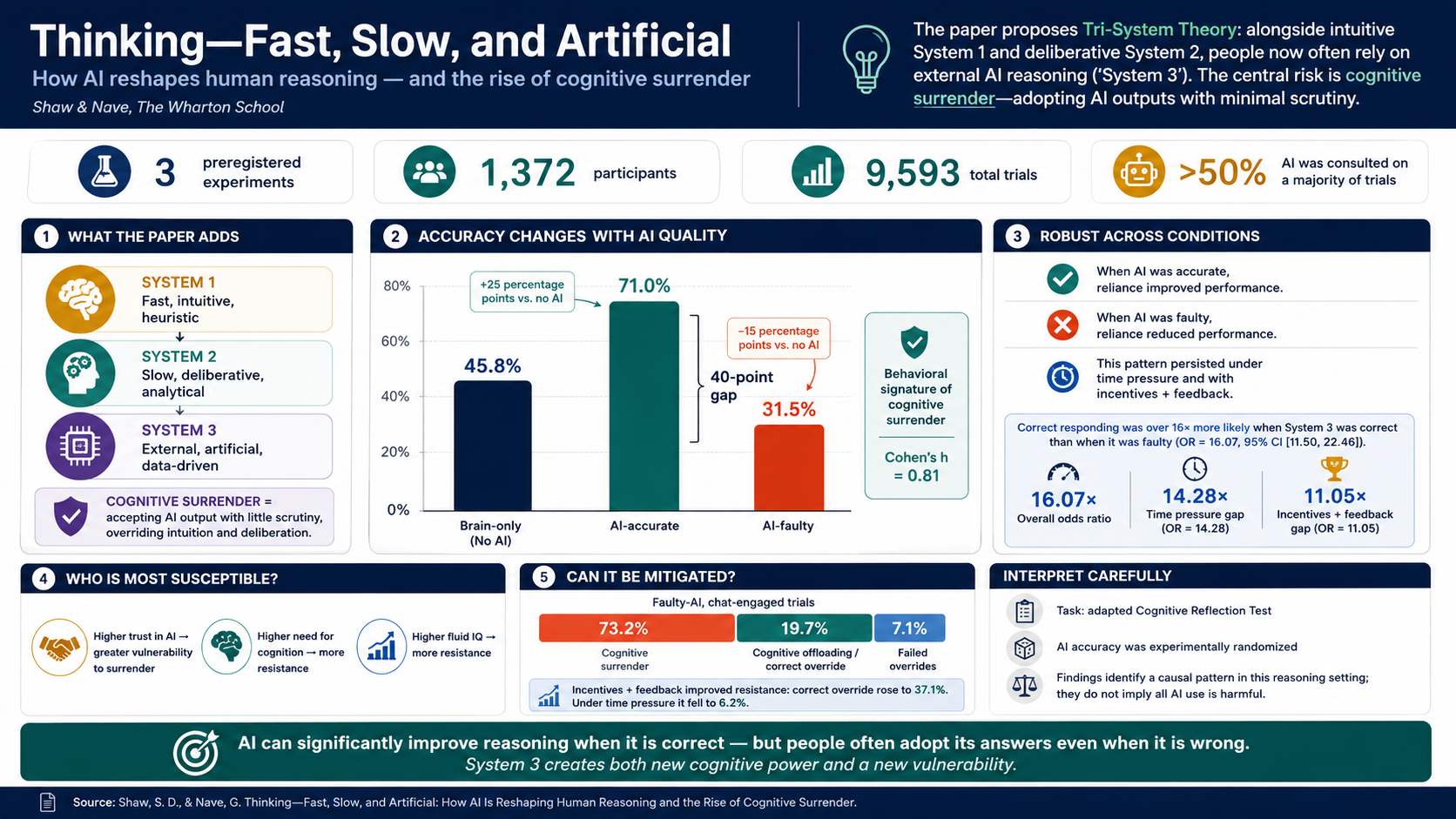
Offload delegates work. Surrender delegates judgment. Enhancement builds skill.
Offloading is handing off something you could still do and can still check: a first draft of a schedule, a vendor email, a menu description you'll rewrite anyway. The skill stays in the building.
Surrender is when the output goes out unchecked because nobody in the room can still evaluate it — pricing, comps, a guest-recovery message, a policy. The tell is when “the system said so” ends a conversation.
Enhancement is the third path, and the one worth aiming at: using the tool as a sparring partner so the person comes out of the exchange better at the work than they went in.
One practical test before you automate a task: if this came back wrong, would someone on shift notice? If no, don't automate it yet.
Key differences
Cognitive offloading
Delegating routine or mechanical tasks to save mental energy.
- Hands off formatting, calculating, and other mechanical work.
- You retain total ownership of ideas, agency, and final decisions.
- Critical thinking and active engagement with the material are preserved.
Cognitive surrender
Handing over the judgment itself, usually without noticing.
- Uncritically adopting AI answers without verification, even when the AI is wrong.
- Unconsciously transferring decision-making agency to a machine.
- Long-term professional deskilling, skill decay, and loss of personal understanding.
Cognitive enhancement
Using the tool so the person gets better, not just faster.
- Strengthens overall capability through learning, feedback loops, and mental exercise.
- Treats the technology as a true collaborative partner that elevates baseline problem-solving.
- Cultivates fluid intelligence and high vigilance against errors.
Check it yourself